Wednesday, March 4, 2020

Circulatory System

circulatory system!!!!!
credited by VSRao


Body System Function:
The Circulatory system is an organ system  that gives blood to circulate and transport nutrients, oxygen,
carbon dioxide, hormones, and blood cells to and from the cells in the body to provide nourishment and
help in fighting diseases.


Body System Organs:
There are 3 main organs. The first one is the heart. The function of the heart is to pump blood around the
body via and giving supplying oxygen and nutrients to the tissues and removing carbon dioxide and
other wastes. The second one is the lungs main role in the circulatory system is to bring in air from your
surroundings and pass oxygen into the bloodstream. From there, it circulates to the rest of the body.
Arteries carry oxygen and rich blood from the heart through the body. Veins carry oxygen and poor
blood back to the heart.

Interaction with other Systems:
the circulatory system works closely with other systems in our bodies.
It supplies oxygen and nutrients to our bodies by working with the respiratory system.
At the same time, the circulatory system helps carry waste and carbon dioxide out of the body.
It also works with the digestive system to get nutrients distributed through your body.
While the digestive system collects and removes undigested solids, the excretory system filters compounds
from the bloodstream and collects them in urine.


Analogy Picture:
Credited by Open Grid Scheduler


Analogy Explanation:
The circulatory system is like a highway. The human body is the city.
The veins and arteries are the roads where things are transported.
The trucks are like blood being carried into and out of the city and cars are
like the oxygen and nutrients transported across the system.

Wikipedia contributors. "Circulatory system." The Free Encyclopedia.23 Feb. 2020. Web. 18  
       Mar. 2020.


Lewis,tanya.”Human Heart:Anatomy function Facts”Live science.Mar 2016. Feb 28 2020      


Monday, March 2, 2020

Example of Research Blog Post


The Skeletal System


The skeletal system works forms a strong structure for the body, gives the body its shape, protects the inside organs, and makes red blood cells.

The skeletal system is comprised of:

Bones: their purpose is to protect and support the function of other organs in the body. Bones store minerals and provide blood protection while producing red and white blood cells.

Cartilage: A connective tissue located throughout the body. Cartilage supports the structure of many body parts and functions like the bones, ribs, ears and nose.

Tendons: Provide the connection between muscle and bone. Tendons work with the muscles to allow movement, since they can withstand pressure and tension.

Ligaments: Connect bones to other bones. They provide stability to joints during rest and active movement.

Joints: Made up of bones, tendons and ligaments, they allow for a vast range of movement.

Pivot: Found at the top of the spine, it allows your head to move from side to side

Hinge: This type of joint can open and close like a door. The elbow is an example of a hinge joint.

Gliding joints:This type of joint has two bone plates that glide against one another. Gliding joints can be found in the ankles and wrists.

Ball-and-socket joints: Found in the shoulder and hips, this type of joint allows forward motion, backward motion and circular rotation.

The skeletal system does not work alone. It interacts with the muscular system. Muscles connect to the skeleton and contract and relax to move the skeleton. Ligaments and bones working together make the process of movement happen smoothly. The bones in the skeleton also work with the circulatory system. The marrow inside the bones produces the red and white blood cells that are needed to ward against disease and provide oxygen and remove waste from all the cells in the body.

Analogy

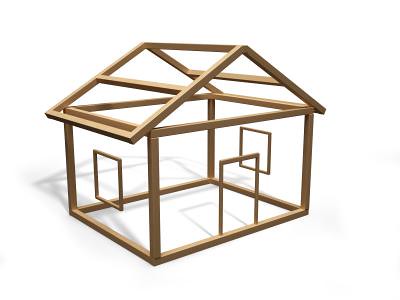
The Skeletal System is like the frame of a house because a house frame:
  • provides a strong structure, 
  • forms its shape, and 
  • protects the insides of the house.
The bones are like the wooden beams because they provide the structure. The ligaments are like the nails that connect the beams to one another. Hinge joints are found in doors, while gliding joints are found in the sliding doors of a house.

    Structure and Function

    The main function of the spine is to provide support for the body and head, withstand impact and protect the spinal cord. The vertebrae are uniquely shaped to perform these functions.
    1. It is made of hard compact bone tissue, which protects the spine. However, they needed to have a hole in the middle so that the spinal cord can pass through.
    2. It is made of several smaller bones (vertebrae). This allows the spine to flex making it possible for us to bend over, while also providing some room to cushion the impact when we jump. If it was one long bony column, it would probably dig into our brain every time we played jump rope.
    3. The different vertebrae  have unique shapes depending on where they are located, which allows different muscles and ligaments to be attached to them. This provides a way for each section (or vertebrae) to interact with the muscular system giving mechanical support so that we can remain upright.

    Sources:
    http://www.ehow.com/facts_5526207_major-organs-skeletal-system.html#ixzz2ozV0vTnK

    Tuesday, February 25, 2020

    Human Body Systems Research Post Guidelines


                    Human Body Systems Research Post Guidelines


    1- Title: Include the name of your body system. 
    /1 point.


    2-Body System Picture: Have a picture of the whole body    system. 


    (For example; the whole skeletal and some pictures of it's different bones).
     /2 points


    3-Body System Function: Write a statement of body system's job(s).   

    /5 points


    4-Body System Organs: Include the name and function of each of the major organs of the body system. 

     /5 points


    5-Interaction with other Systems: Explain how this system works with other system 
    in the body.  
    / 5 points


    6- Analogy:


       Analogy Picture:  Include the picture of some person, place or thing that does the same job as the body system.
    /1 point.


     Analogy Explanation:
     Explain why the analogy explanation your team choose is like the body system your are writing about.                                                       
     / 10 points


     Bonus: You may increase your points by adding analogies for the organs themselves. However, this only works if they fall with the original analogy.


    Check out the video link below to understand what an analogy is:

                              https://www.youtube.com/watch?v=V3TcyISCHZM#action=share


    Sources: Please cite all print and web resources your team will use to research on the chosen human body system.


                                  Good Luck!